Author: PulsMed MC

Osteoporosis and Densitometry: What You Need to Know

Osteoporosis is a systemic skeletal disease characterized by decreased bone density
and deterioration of bone tissue, leading to increased bone fragility and a higher risk
of fractures. It develops gradually and often has no symptoms in the early stages.

People at higher risk include:

  • Postmenopausal women
  • Elderly individuals
  • Those with a family history of osteoporosis
  • People taking long-term corticosteroids
  • Individuals with metabolic disorders (e.g. thyroid disease, diabetes, eating
    disorders)

Symptoms of Osteoporosis:

  • Loss of height
  • Stooped posture (kyphosis)
  • Frequent fractures (especially in the spine, hip, or wrist)
  • Back or bone pain

To detect osteoporosis early, a test called densitometry is used to measure bone
mineral density (BMD).
Densitometry (most commonly via DEXA , or dual-energy X-ray absorptiometry) is a
non-invasive, painless procedure that accurately measures bone density. It helps
diagnose osteopenia (low bone mass) or osteoporosis even before a fracture occurs.

At Puls Med Medical Center, the procedure is performed using a state-of-the-art,
next-generation X-ray densitometry machine manufactured in 2023. The device
simultaneously scans all the bones of the body, including the two most vulnerable
areas Lumbar spine , Hip (femoral neck) as fractures most commonly occur in these
bones.

Who Should Get a Densitometry Scan?

  • Women over 50
  • Men over 65
  • Anyone with a history of fractures after age 40
  • People with risk factors (e.g. sedentary lifestyle, smoking, alcohol use, low calcium
    or vitamin D intake)
  • Patients on long-term steroid therapy

Osteoporosis can have serious consequences, especially for older adults. Hip
fractures, for example, often require surgery and long rehabilitation — and in some
cases, can lead to long-term disability or premature death. Early diagnosis and
prevention are key to reducing these risks.

Osteoporosis is a serious but manageable condition. Densitometry is a crucial tool
for early detection. Regular screening, proper nutrition, physical activity, and —
when necessary — medication can help maintain strong bones and a good quality of
life.

What is vascular duplex or ultrasound examination of vessels and where is it best to do it in Yerevan?

Vascular duplex scanning (ultrasound examination of vessels, duplex/triplex, angioscanning, ultrasound Doppler) is a non-invasive ultrasound diagnostic method that allows you to assess the condition of the vessels and blood flow in them.

Vascular duplex is performed in two modes:

🔹Normal B-mode (allows you to assess the condition of the vessels).
🔹Doppler mode, ultrasound Doppler (blood flow characteristics are determined).

During duplex scanning of vessels, the following parameters are assessed:

-Anatomical structure of arteries and veins
-Structural changes in the lumen and walls (narrowing, expansion, blockage, presence of blood clots, atherosclerotic plaques)
-patency of vessels , -blood flow speed and direction,
-Intimate-media complex,
-atherosclerotic changes in arterial walls.

Types of duplex scanning performed at the Pulse.Med clinic

🔸Vessels of the lower extremities (arteries and veins, simultaneously or separately)
🔸Vessels of the upper extremities (arteries and veins, simultaneously or separately)
🔸Duplex scanning of the vessels of the head and neck (ecstracranial part)
🔸Duplex of the vessels of the scrotum and penis
🔸Duplex scanning of the abdominal aorta and vessels of the abdominal cavity
🔸Duplex scanning of the renal vessels

Sclerotherapy in Yerevan: painless and affordable

Sclerotherapy is the injection of a special substance-sclerosant, into the lumen of the vein, which, acting on the inner layer of the vein, the intima, leads to its damage, followed by adhesion of the walls and the vein turning into a connective tissue cord.

After the effect of the sclerosant, a thin cord of connective tissue is formed within 2-6 months, then it undergoes resorption and completely disappears within an average of 4-6 months, depending on the diameter of the vein.

During this time, brown pigmentation appears in place of the vein, which is temporary and also disappears within an average of 4-6 months, again depending on the diameter.

This is a very light procedure that provides a wonderful aesthetic result.

In many cases, if the varicose disease is not very pronounced, it is possible to perform sclerotherapy even in the case of more pronounced and large vessels and avoid surgery, but these cases are selected by the phlebologist, after a detailed duplex examination.

Sclerotherapy is usually performed in several stages in order to avoid an overdose of the drug and the development of side effects. Thus, an average of 3 to 10-15 injections are performed in one session (more in the case of spider veins and less in the case of thick varicose veins), therefore, the more pronounced the disease, the longer the treatment (on average at least 3-4 sessions), and later, sometimes it is also necessary to make corrections, especially in the case of complex and widespread capillary networks. The interval between sessions is at least 5-7 days.

The sclerotherapy procedure is practically painless (it does not differ in feeling from ordinary vaccinations), as it is carried out using special thin disposable needles. The phlebologist makes the necessary number of injections into the dilated veins, after which an elastic bandage is immediately applied to the leg. After the procedure, it is necessary to walk for 30-40 minutes. And the elastic bandage is worn for 7-14 days, depending on the specific case.

Sclerotherapy with 1 ampoule costs AMD 50,000, which is often enough for 2 legs together, and currently, 30% applies for one CLACS procedure, due to which the price with a discount is AMD 42,000 (20-minute procedure). And the total cost depends on the number and type of vessels, to find out how much it will cost in total and what it will cost, you can come for a free consultation.

Varicose disease: types, diagnosis, treatment

How is it diagnosed?

The gold standard for diagnosing varicose veins is a duplex ultrasound of the lower extremity vessels. This examination provides clear images of the vein walls, their structure, size changes, and valve function, including any valvular insufficiency. It can also reveal the presence of a thrombus, allowing for an assessment of the thrombus tip and the risk of it breaking off, as well as an estimation of when the thrombus formed. This information is crucial for determining the appropriate treatment strategy and planning any necessary surgery.

At the PulseMed Medical Center, a detailed map is created during the duplex examination, highlighting both healthy and diseased veins. This map serves as a valuable guide for the surgeon during the operation, ensuring that only the affected veins are removed while preserving the healthy ones. The duplex examination at PulseMed is conducted by vascular surgeon Ani Abovyan, who has trained in duplex ultrasound and laser varicose vein surgery with leading specialists in Europe and Russia.

Text #2

All the Latest Methods for Capillary and Couperose Removal at PulseMed

Contents:

  • Sclerotherapy
    • Sclerotherapy with Ultrasound Guidance
    • Laser Coagulation of Telangiectasias
    • The Newest CLACS Method

Chronic venous insufficiency is a common condition worldwide, affecting about 70% of adults. It not only poses significant health risks but also creates aesthetic concerns that can negatively impact a patient’s quality of life.

Sclerotherapy: Key Features

Sclerotherapy is a minimally invasive procedure involving injections that cause only slight discomfort. Using a fine needle, a small amount of a harmless adhesive solution is injected into the dilated vessel, causing the vessel walls to stick together. This closes off the vessel, which is gradually absorbed by the body and permanently disappears.

After the 20-30 minute procedure, it is necessary to walk for 40 minutes and wear compression stockings for 5-15 days, depending on the size of the treated vessels.

Sclerotherapy can be performed using either liquid or foam, depending on the type of vessel. A duplex ultrasound examination is required before the procedure to confirm the diagnosis. Afterward, some swelling and bruising may occur, but these typically subside within two weeks.

Advantages of this method include:

  • High therapeutic and aesthetic effectiveness
  • Minimal discomfort during the procedure
  • Short procedure time
  • No rehabilitation period required

Sclerotherapy with Ultrasound Guidance

This method involves foam sclerotherapy guided by ultrasound, which is particularly effective for deeper or larger vessels. The procedure still takes only 20-30 minutes, followed by a mandatory 40-minute walk and wearing compression stockings for two weeks.

Laser Coagulation of Telangiectasias

Telangiectasias, small purple spider veins, are treated using a specialized vascular laser. The laser penetrates 1-2 mm into the skin, causing a stable spasm of the vessel without damaging the skin. The treated vessels are absorbed by the body within 2-4 weeks. In some cases, compression stockings may not even be necessary.

The Newest CLACS Method

CLACS, or CryoLaser CryoSclerotherapy, is the latest and most effective method that combines laser treatment with injections for faster and more efficient results. This technique is performed for the first time in Armenia, exclusively at the PulseMed clinic. After the procedure, compression stockings are not required, but special creams should be applied to the skin.


  Title:
Varicose Vein Laser Surgery According to Modern European Guidelines

What is Varicose Disease?

What is the best treatment method for varicose veins?

Varicose veins develop due to the weakening of the vessel walls, which can be caused by several factors:

  • Hereditary predisposition
  • Physical exertion
  • Pregnancy
  • Hormonal imbalances
  • Occupations requiring prolonged standing (e.g., hairdressers, cooks, salespeople, waiters)
  • Sitting for extended periods (e.g., office workers, tailors, programmers), especially in improper positions such as sitting with crossed legs
  • Wearing high heels frequently
  • Obesity
  • A sedentary lifestyle

All of these factors contribute to increased pressure in the blood vessels, disrupting the normal flow of blood through the veins in the legs. As a result, the veins become overfilled with blood, causing them to expand and leading to blood stagnation in the lower legs.

As a consequence, many symptoms and skin changes can appear, including:

  • Leg heaviness and fatigue at the end of the day
  • Swelling in the lower legs
  • Nighttime muscle cramps
  • Pain and burning sensations
  • The appearance of varicose veins and spider veins
  • Skin hardening, redness, pain, and even the development of trophic ulcers

If left untreated, varicose veins can lead to a serious complication: thrombosis. In thrombosis, a blood clot forms within the affected vein, causing localized redness, sharp pain, and difficulty placing weight on the affected leg.

Thrombosis, in turn, can result in a potentially life-threatening complication: pulmonary embolism. In this condition, a part of the blood clot breaks off, travels through the bloodstream to the heart, and blocks a branch of the pulmonary artery, which may lead to sudden death.

Signs of pulmonary embolism include acute chest pain, shortness of breath, and difficulty breathing. If these symptoms occur, immediate medical attention is necessary.

What is the Best Treatment for Varicose Veins?

Thanks to advancements in modern medicine, varicose veins can now be treated quickly and effectively. Laser surgery for varicose veins allows even the most complicated cases to be addressed in about an hour, without the need for incisions, stitches, or general or epidural anesthesia—only local tumescent anesthesia is used. In fact, some patients don’t need to miss any work at all, as they can return home 40 minutes after the procedure and go back to work the following day.

How is Laser Surgery for Varicose Veins Performed?

Using duplex ultrasound, the surgeon identifies the puncture site of the affected vein. A needle is then used to access the vein, through which a guidewire and dilator are inserted. The laser fiber is passed along the guidewire to the start of the diseased vein. While monitoring the procedure on a screen, the surgeon administers tumescent anesthesia along the length of the vein. Then, the laser is activated to close the vein, slowly withdrawing the fiber to ensure complete closure. Over time, the closed vein is absorbed and disappears.

The procedure is entirely safe and painless, with the patient only experiencing minor discomfort during the tumescent anesthesia injections.

Immediately after surgery, the patient is fitted with compression stockings, stands up, walks for 40 minutes, and can then return home.

How to Prevent Varicose Veins

  • Avoid prolonged standing or sitting
  • Maintain a healthy weight
  • Engage in regular physical activity
  • Wear compression stockings

Lymphedema treatment

Lymphedema is a chronic disease caused by disorders of lymphatic drainage, which sometimes causes a significant reduction in quality of life. Lymphedema treatment counteracts the worsening of lymphedema and often requires patience, because it is costly and lengthy and may even be necessary for life. Lymphedema and lymphedema treatment are described below.
logo-gefaessmedizin-muenchen

What is lymph?

Lymph is formed by the discharge of blood plasma from the blood capillaries into the body tissues, where it serves to transport various substances and cells. On the one hand, it transports nutrients and oxygen as well as certain defense cells, and on the other hand, waste products that accumulate in the tissue.

The lymph is returned to the bloodstream via widely branched lymphatic channels in the body, which can transport fluids in a similar way to the vascular system. Harmful substances and tumor cells are intercepted in the lymph nodes and rendered harmless. Edema is a swelling of tissue caused by fluid retention.

What is lymphedema?

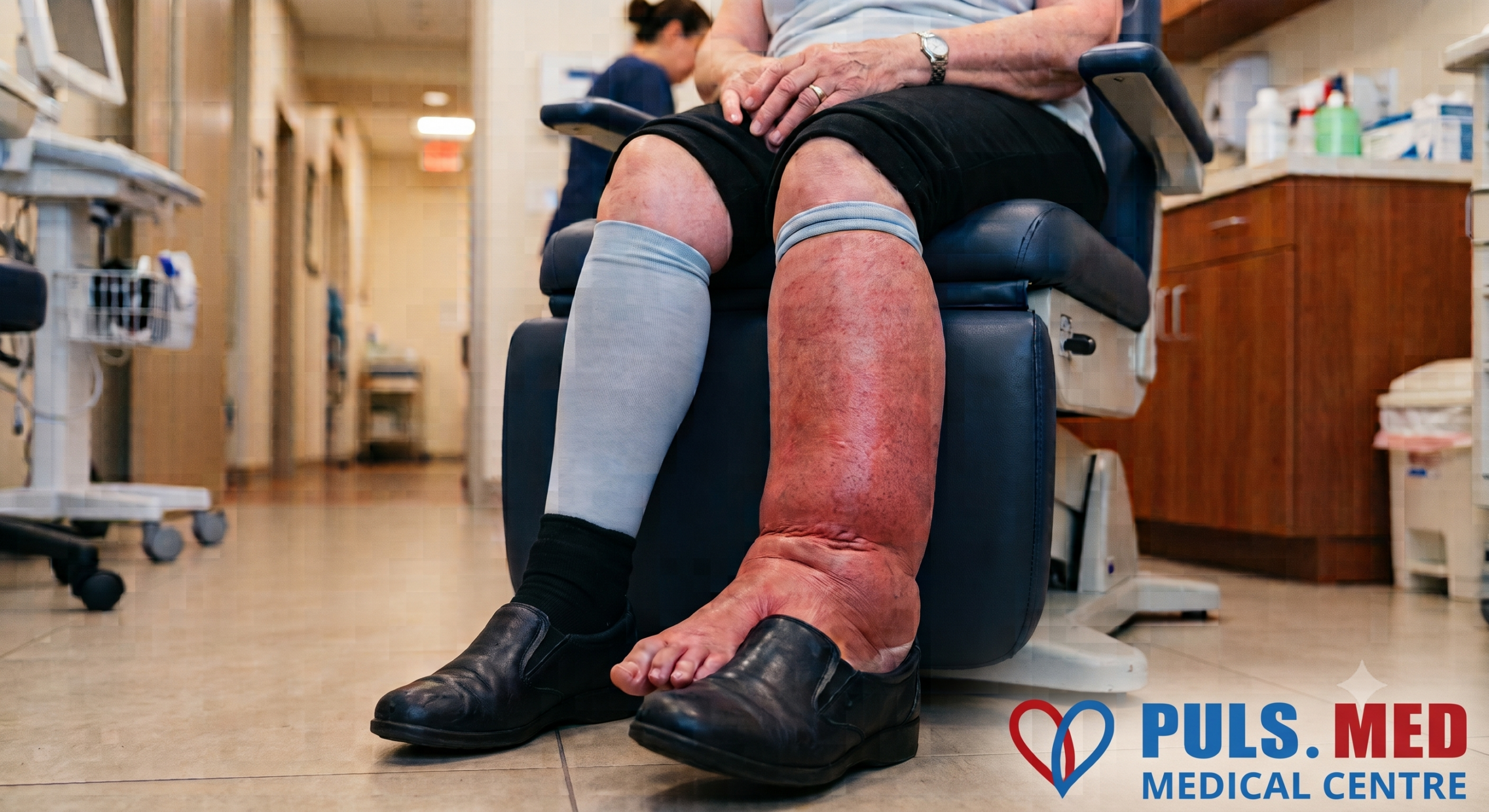
In lymphedema, a congestion in the lymphatic system causes swelling of the corresponding body regions, for example, one or both legs (this can lead to lymphedema of the foot or lymphedema of the lower leg or lymphedema of the thigh) or one or both arms. Areas of the face or other parts of the body may also swell. The lymphatic congestion causes an increase in pressure in the tissue, which in the long term leads to damage to the skin.

For example, the skin can no longer perform its defense function properly. As a result, minor injuries can lead to the penetration of bacteria, which can then spread in the damaged skin. This then leads to an infection of the skin, which is accompanied by painful redness (erysipelas). Erysipelas therapy is usually carried out with antibiotics.

Causes of lymphedema:

Causes of lymphedema can be very different: So-called primary lymphedema develops as a congenital, genetic disease due to a malformation or malfunction of the lymphatic system. Primary lymphedema is often caused by mutations, which are either inherited or can also be newly formed. Primary lymphedema often begins on both sides of the toes and feet (toe lymphedema, foot lymphedema).

However, most lymphedema patients have secondary lymphedema. Secondary lymphedema develops, for example, in the context of an injury (traumatic) or in the context of internal diseases. A tumor or surgery or radiation is also a frequent trigger of secondary lymphedema. Other causes are inflammations such as erysipelas and insect bites. Weakness of the veins can also be the cause of lymphedema: In the context of chronic venous insufficiency, open legs (leg ulcers) with chronic inflammatory processes often occur if left untreated, which in turn can cause lymphedema. Ulcus cruris treatment is discussed elsewhere.

Symptoms of lymphedema:

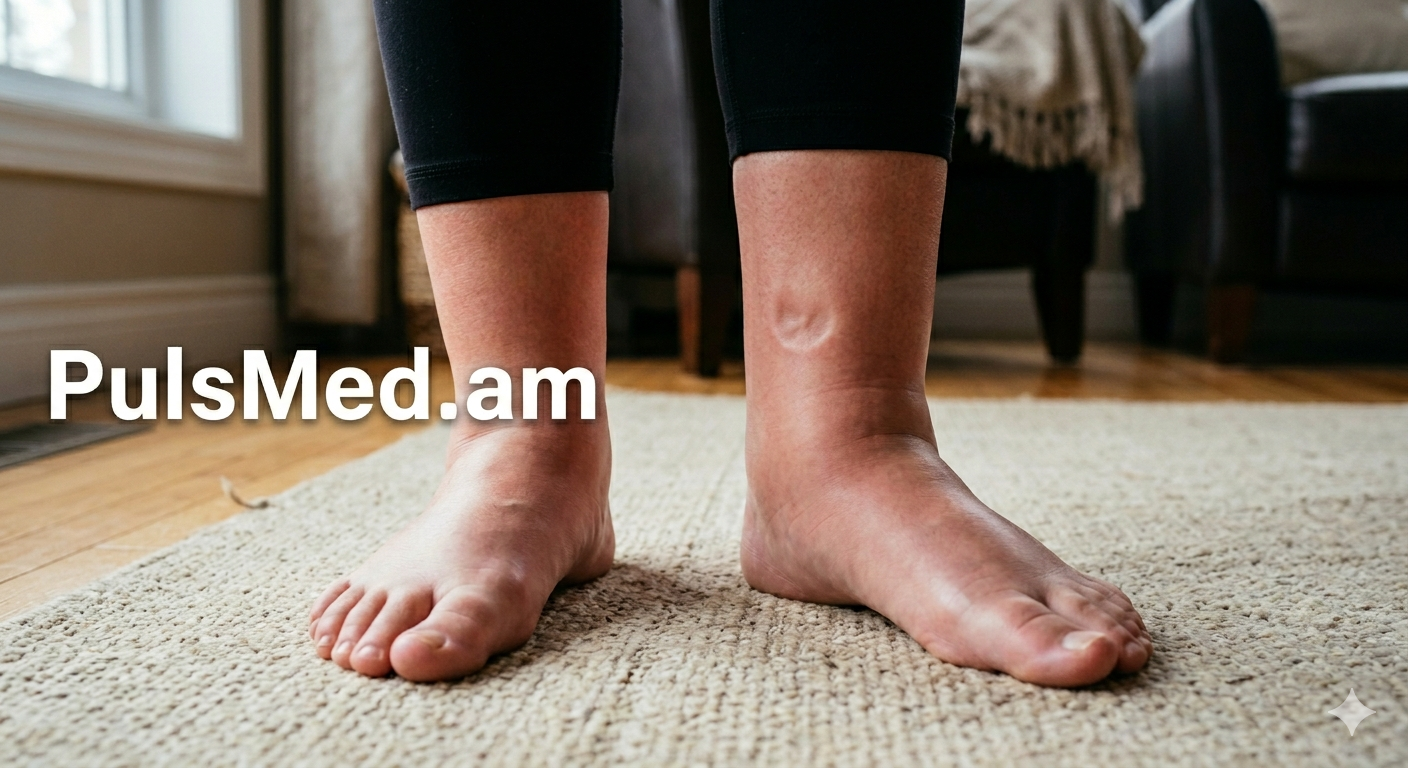
Lymphedema begins with a doughy, painless swelling of one or both sides that initially forms a dent in the skin due to firm pressure. The leg feels heavy and may ache. In early stages, the edema regresses overnight, meaning it is gone by morning. As the disease progresses, the edema does not go away overnight and is present by morning.

Which doctor diagnoses lymphedema?

In the case of lymphedema, the general practitioner usually issues a referral for diagnosis and treatment of lymphedema to the specialist in internal medicine and angiology or straight to the lymphologist. The lymphologist is a physician who is specially trained in the diagnosis and treatment of diseases of the lymphatic system. There the lymphedema treatment is initiated.

How does the doctor diagnose lymphedema?

Lymphedema should be diagnosed as soon as possible so that lymphedema treatment can begin as soon as possible. The diagnosis of lymphedema is made clinically. Additional examinations are usually only necessary in unclear cases or in preparation for surgery. In primary lymphedema, swelling of the feet is found on one or both sides. The edema is initially found only on the backs of the toes, later on the forefoot. The skin folds at the base of the toes are deepened. The toes may take on a box shape. At first, the edema is soft and reversible overnight; later, as the condition progresses, it becomes coarse and progresses to the lower leg and thigh.

Due to lymphostasis, tissue changes such as fibrosis and increased local adipose tissue formation occur over time. Typical skin changes (papillomatosis, hyperkeratosis) are found in advanced stages. Often, over time, there is an extreme increase in volume of the extremity, which is not caused by the lymphedema alone, but by massive fatty tissue formation. In secondary lymphedema, there is more often thigh-emphasized swelling, and the groin as well as the hip and genital region may also be involved in the swelling.

Lymphedema stages:

Lymphedema is divided into several stages: In stage 0, the edema is not yet visible, although the removal of lymph is already disturbed. Stage 1 means that swelling is already noticed, although this recedes when the limb is elevated. The edema is soft and compressible. Stage 2 means that the swelling does not resolve with elevation of the limb alone. Stage 3 shows extensive swelling, the tissue has hardened and the skin can no longer be pressed in. There may be color changes in the skin as well as wart-like skin lesions. The skin becomes susceptible to infection.

What is the difference between lymphedema and lipedema?

Lymphedema is often confused with lipedema. In lipedema, there is a disease of the fatty tissue, which is very painful with pressure and often accompanied by bruising. In lipedema, there is often swelling of the upper and lower legs, with slender feet. In contrast, in lymphedema, there is often edema of the toes and foot. However, transitional forms to lymphedema are also seen. In unclear cases, imaging (e.g., dye tests or scintigraphy) may be used. Lipedema treatment differs from lymphedema treatment in that lymphatic drainage is often not a significant factor in lipedema.

Lymphedema treatment:

For lymphedema treatment, decongestive therapy is initiated. Lymphedema treatment includes manual lymphatic drainage by specially trained physiotherapists, during which the lymphatic channels of the body are activated so that the lymph fluid is transported towards the abdomen and chest. Lymphedema treatment by means of lymphatic drainage is performed not only on the swollen part of the body, but on all lymphatic channels of the body. Thus, when treating foot lymphedema, the leg and upper body are also treated. The lymphedema treatment is therefore to be understood as a whole body treatment.

In addition, lymphedema treatment also includes compression therapy with compression bandages. The treatment of lymphedema in the foot or lymphedema of the legs is carried out by applying firm bandages. Swollen arms and legs are tightly wrapped with bandages for this purpose. Due to the increase in pressure, the lymph is better transported out of the extremity, which leads to relief of the skin. Open skin areas can thus heal better.

During lymphedema treatment, bandages are reapplied regularly – sometimes several times a day – until the lymphedema has subsided enough for a compression stocking to be made. If the toes or fingers are involved in the lymphedema, toe caps and gloves must also be specially made. The bandages must always be worn at first, otherwise the edema will return.

Lymphedema treatment by machine lymphatic drainage:

In addition to manual lymphatic drainage, mechanical lymphatic drainage can also be used for lymphedema treatment in severe cases: Here, with the help of cuffs that fill with air one after the other, the lymph is transported towards the abdominal and chest area. Mechanical lymphatic drainage is regularly used in our practice for lymphedema treatment. After decongestion of the extremities, we fit compression stockings, mostly in flat knitting technique, which are preferably used in lymphedema treatment.

What can you do yourself to treat lymphedema?

The patient can help with the lymphedema treatment himself: Activating exercise therapy is essential for lymphedema treatment. Regular movement and breathing exercises promote lymph flow and help to remove the edema. In lymphedema treatment, exercises should be performed 2-3 times a day. Swimming or water gymnastics are ideal, as under water there is increased pressure on the lymphatic channels, thus promoting the removal of lymph. Excess weight and a too passive lifestyle can promote the development of lymphedema. An active lifestyle is recommended for lymphedema treatment.

Medication in the treatment of lymphedema:

There is currently no causal drug therapy for lymphedema treatment. Diuretics are not recommended because they increase the protein content of the tissue and thus tend to promote the development of edema.

Surgical lymphedema treatment:

Surgical treatment of lymphedema, such as lymphovenous anastomosis or lymph node transfer, is only possible in rare exceptions. Therefore, surgery for lymphedema is usually not useful.

Skin care during lymphedema treatment:

Lymphedema treatment also includes skin care: the skin is stressed both by the increased pressure in the lymphatic gaps and by wearing a compression stocking. Lymphedema treatment with the compression stocking dries out the skin and makes it susceptible to minor injuries, which increases the risk that bacteria can penetrate the skin. Due to lymphedema, the skin’s defense function is disturbed and infections (erysipelas) occur more frequently, which then often require antibiotic treatment. Skin care helps the skin to recover from compression therapy and protects against infections. Small wounds should be treated immediately with disinfectant spray. Moisturizing creams and lotions keep the skin supple.

Conclusion:

Lymphedema is a chronic, often progressive disease that should be addressed as soon as possible with effective therapy. Diagnosis and treatment of lymphedema can be performed professionally in our practice. The main pillar of lymphedema treatment is compression therapy with compression stockings. Another pillar of lymphedema treatment is manual and device lymphatic drainage as well as an active lifestyle.

Lymphedema treatment is a health insurance benefit and the costs are covered by the health insurance. However, compression stockings are prescribed for the treatment of lymphedema of the foot or lymphedema of the leg, as well as lymphedema of the arm, for which the patient must pay a smaller portion of the costs (statutory co-payment of 10%). As a rule, health insurance companies reimburse two supplies per year.
Submit a registration request
Online registration
Scan the code
Receptionist
Hello, do you want to register for counsultation?